
support@toolsyindia.com
Brands
Cisco
Layer 2 Switching
Spanning Tree Protocol Standard 802.1d Spanning Tree Support
Fast convergence using 802.1w (Rapid Spanning Tree [RSTP]), enabled by default
Multiple spanning tree instances using 802.1s (MSTP). 16 instances are supported
Port grouping/link aggregation
Support for IEEE 802.3ad Link Aggregation Control Protocol (LACP)
Up to 32 groups
Up to 8 ports per group with 16 candidate ports for each (dynamic) 802.3ad LAG
VLAN
Support for up to 4094 active VLANs simultaneously; port-based and 802.1Q tag-based VLANs; MAC-based VLAN
Management VLAN
Private VLAN with promiscuous, isolated, and community port
Guest VLAN, unauthenticated VLAN, protocol-based VLAN, IP subnet-based VLAN, CPE VLAN
Dynamic VLAN assignment using RADIUS server along with 802.1x client authentication
Voice VLAN Voice traffic is automatically assigned to a voice-specific VLAN and treated with appropriate levels of QoS. Auto voice capabilities deliver network-wide zero touch deployment of voice endpoints and call control devices.
Multicast TV VLAN Multicast TV VLAN allows the single multicast VLAN to be shared in the network while subscribers remain in separate VLANs. This feature is also known as Multicast VLAN Registration (MVR).
Q-in-Q VLANs transparently cross over a service provider network while isolating traffic among customers.
GVRP/GARP Generic VLAN Registration Protocol (GVRP) and Generic Attribute Registration Protocol (GARP) enable automatic propagation and configuration of VLANs in a bridged domain.
Unidirectional Link Detection (UDLD) UDLD monitors physical connection to detect unidirectional links caused by incorrect wiring or port faults to prevent forwarding loops and blackholing of traffic in switched networks.
DHCP Relay at Layer 2 Relay of DHCP traffic to DHCP server in a different VLAN. Works with DHCP option 82.
IGMP (versions 1, 2, and 3) snooping Internet Group Management Protocol (IGMP) limits bandwidth-intensive multicast traffic to only the requesters; supports 4K multicast groups (source-specific multicasting is also supported).
IGMP querier IGMP querier is used to support a Layer 2 multicast domain of snooping switches in the absence of a multicast router.
HOL blocking Head-of-line (HOL) blocking.
Layer 3
IPv4 routing Wirespeed routing of IPv4 packets
Up to 7K routes and up to 256 IP interfaces
Wirespeed IPv6 Static Routing Up to 7K routes and up to 256 IPv6 interfaces
Layer 3 interface Configuration of Layer 3 interface on physical port, LAG, VLAN interface, or loopback interface
CIDR Support for Classless Inter-Domain Routing
RIP v2 Support for Routing Information Protocol version 2, for dynamic routing
VRRP Virtual Router Redundancy Protocol (VRRP) delivers improved availability in a Layer 3 network by providing redundancy of the default gateway servicing hosts on the network. VRRP versions 2 and 3 are supported. Up to 255 virtual routers are supported
Policy-based routing (PBR) Flexible routing control to direct packets to different next hop based on IPv4 or IPv6 ACL
DHCP server Switch functions as an IPv4 DHCP server serving IP addresses for multiple DHCP pools/scopes.
Support for DHCP options
DHCP Relay at Layer 3 Relay of DHCP traffic across IP domains.
User Datagram Protocol (UDP) Relay Relay of broadcast information across Layer 3 domains for application discovery or relaying of BOOTP/DHCP packets.
Stacking
Hardware stack Up to 8 units in a stack. Up to 400 ports managed as a single system with hardware failover.
High availability Fast stack failover delivers minimal traffic loss. Support link aggregation across multiple units in a stack.
Plug-and-play stacking configuration/management
Master/backup for resilient stack control
Auto-numbering
Hot swap of units in stack
Ring and chain stacking options, autostacking port speed, flexible stacking port options
High-speed stack interconnects Cost-effective high-speed 10G fiber and copper interfaces. Support LAG as stacking interconnects for even higher bandwidth.
Security
SSH Secure Shell (SSH) Protocol secures Telnet traffic to and from the switch. SSH versions 1 and 2 are supported.
SSL Secure Sockets Layer (SSL) encrypts all HTTPS traffic, allowing secure access to the browser-based management GUI in the switch.
IEEE 802.1X (Authenticator role) RADIUS authentication and accounting, MD5 hash, guest VLAN, unauthenticated VLAN, single/multiple host mode and single/multiple sessions
Supports time-based 802.1X dynamic VLAN assignment
Web-based authentication Web-based authentication provides network admission control through web browser to any host devices and operating systems.
STP BPDU Guard A security mechanism to protect the networks from invalid configurations. A port enabled for Bridge Protocol Data Unit (BPDU) Guard is shut down if a BPDU message is received on that port. This avoids accidental topology loops.
STP Root Guard This prevents edge devices not in the network administrator’s control from becoming Spanning Tree Protocol root nodes.
DHCP snooping Filters out DHCP messages with unregistered IP addresses and/or from unexpected or untrusted interfaces. This prevents rogue devices from behaving as a DHCP server.
IP Source Guard (IPSG) When IP Source Guard is enabled at a port, the switch filters out IP packets received from the port if the source IP addresses of the packets have not been statically configured or dynamically learned from DHCP snooping. This prevents IP address spoofing.
Dynamic ARP Inspection (DAI) The switch discards ARP packets from a port if there are no static or dynamic IP/MAC bindings or if there is a discrepancy between the source or destination address in the ARP packet. This prevents man-in-the-middle attacks.
IP/MAC/Port Binding (IPMB) The preceding features (DHCP Snooping, IP Source Guard, and Dynamic ARP Inspection) work together to prevent DoS attacks in the network, thereby increasing network availability.
Secure Core Technology (SCT) Makes sure that the switch will receive and process management and protocol traffic no matter how much traffic is received.
Secure Sensitive Data (SSD) A mechanism to manage sensitive data (such as passwords, keys, and so on) securely on the switch, populating this data to other devices, and secure autoconfig. Access to view the sensitive data as plaintext or encrypted is provided according to the user-configured access level and the access method of the user.
Private VLAN Private VLAN provides security and isolation between switch ports, which helps ensure that users cannot snoop on other users’ traffic; supports multiple uplinks.
Port security Ability to lock MAC addresses to ports, and limit the number of learned MAC addresses.
RADIUS/TACACS+ Supports RADIUS and TACACS authentication. Switch functions as a client.
RADIUS accounting The RADIUS accounting functions allow data to be sent at the start and end of services, indicating the amount of resources (such as time, packets, bytes, and so on) used during the session.
Storm control Broadcast, multicast, and unknown unicast.
DoS prevention Denial-of-service (DoS) attack prevention.
Multiple user privilege levels in CLI Levels 1, 7, and 15 privilege levels.
ACLs Support for up to 2K entries on SG550XG models.
Support for up to 3K entries on all other models.
Drop or rate limit based on source and destination MAC, VLAN ID or IP address, protocol, port, DSCP/IP precedence, TCP/User Datagram Protocol (UDP) source and destination ports, 802.1p priority, Ethernet type, Internet Control Message Protocol (ICMP) packets, Internet Group Management Protocol (IGMP) packets, TCP flag; ACL can be applied on both ingress and egress sides.
Time-based ACLs supported.
There is £4.99 charge for delivery under £50 Orders. Additional charges will be imposed by our couriers for delivery to remote area, a surcharge may be levied to cover carriage to these areas.
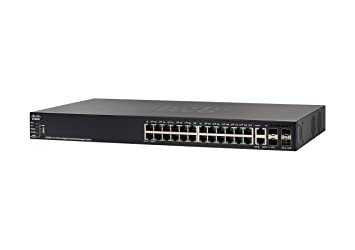
Cisco SG550X-24 24-Port Gigabit Stackable Managed Switch
₹199,999.00 Original price was: ₹199,999.00.₹139,999.00Current price is: ₹139,999.00.
The Cisco 550X Series are the next-generation stackable managed Ethernet switches that provide the advanced capabilities and superior performance you need to support a more demanding network environment at an affordable price. These switches incorporate fan and power hardware redundancy, increasing overall network availability. The SG550X and SF550X models provide 24 or 48 ports of Gigabit Ethernet and Fast Ethernet connectivity with 10 Gigabit uplinks. The SG550XG models provide 16, 24, or 48 ports of 10 Gigabit Ethernet with both copper and fiber connection options, providing a solid foundation for your current business applications, as well as those you are planning for the future. At the same time, these switches are easy to deploy and manage, without a large IT staff.
Brands
Cisco
Layer 2 Switching
Spanning Tree Protocol Standard 802.1d Spanning Tree Support
Fast convergence using 802.1w (Rapid Spanning Tree [RSTP]), enabled by default
Multiple spanning tree instances using 802.1s (MSTP). 16 instances are supported
Port grouping/link aggregation
Support for IEEE 802.3ad Link Aggregation Control Protocol (LACP)
Up to 32 groups
Up to 8 ports per group with 16 candidate ports for each (dynamic) 802.3ad LAG
VLAN
Support for up to 4094 active VLANs simultaneously; port-based and 802.1Q tag-based VLANs; MAC-based VLAN
Management VLAN
Private VLAN with promiscuous, isolated, and community port
Guest VLAN, unauthenticated VLAN, protocol-based VLAN, IP subnet-based VLAN, CPE VLAN
Dynamic VLAN assignment using RADIUS server along with 802.1x client authentication
Voice VLAN Voice traffic is automatically assigned to a voice-specific VLAN and treated with appropriate levels of QoS. Auto voice capabilities deliver network-wide zero touch deployment of voice endpoints and call control devices.
Multicast TV VLAN Multicast TV VLAN allows the single multicast VLAN to be shared in the network while subscribers remain in separate VLANs. This feature is also known as Multicast VLAN Registration (MVR).
Q-in-Q VLANs transparently cross over a service provider network while isolating traffic among customers.
GVRP/GARP Generic VLAN Registration Protocol (GVRP) and Generic Attribute Registration Protocol (GARP) enable automatic propagation and configuration of VLANs in a bridged domain.
Unidirectional Link Detection (UDLD) UDLD monitors physical connection to detect unidirectional links caused by incorrect wiring or port faults to prevent forwarding loops and blackholing of traffic in switched networks.
DHCP Relay at Layer 2 Relay of DHCP traffic to DHCP server in a different VLAN. Works with DHCP option 82.
IGMP (versions 1, 2, and 3) snooping Internet Group Management Protocol (IGMP) limits bandwidth-intensive multicast traffic to only the requesters; supports 4K multicast groups (source-specific multicasting is also supported).
IGMP querier IGMP querier is used to support a Layer 2 multicast domain of snooping switches in the absence of a multicast router.
HOL blocking Head-of-line (HOL) blocking.
Layer 3
IPv4 routing Wirespeed routing of IPv4 packets
Up to 7K routes and up to 256 IP interfaces
Wirespeed IPv6 Static Routing Up to 7K routes and up to 256 IPv6 interfaces
Layer 3 interface Configuration of Layer 3 interface on physical port, LAG, VLAN interface, or loopback interface
CIDR Support for Classless Inter-Domain Routing
RIP v2 Support for Routing Information Protocol version 2, for dynamic routing
VRRP Virtual Router Redundancy Protocol (VRRP) delivers improved availability in a Layer 3 network by providing redundancy of the default gateway servicing hosts on the network. VRRP versions 2 and 3 are supported. Up to 255 virtual routers are supported
Policy-based routing (PBR) Flexible routing control to direct packets to different next hop based on IPv4 or IPv6 ACL
DHCP server Switch functions as an IPv4 DHCP server serving IP addresses for multiple DHCP pools/scopes.
Support for DHCP options
DHCP Relay at Layer 3 Relay of DHCP traffic across IP domains.
User Datagram Protocol (UDP) Relay Relay of broadcast information across Layer 3 domains for application discovery or relaying of BOOTP/DHCP packets.
Stacking
Hardware stack Up to 8 units in a stack. Up to 400 ports managed as a single system with hardware failover.
High availability Fast stack failover delivers minimal traffic loss. Support link aggregation across multiple units in a stack.
Plug-and-play stacking configuration/management
Master/backup for resilient stack control
Auto-numbering
Hot swap of units in stack
Ring and chain stacking options, autostacking port speed, flexible stacking port options
High-speed stack interconnects Cost-effective high-speed 10G fiber and copper interfaces. Support LAG as stacking interconnects for even higher bandwidth.
Security
SSH Secure Shell (SSH) Protocol secures Telnet traffic to and from the switch. SSH versions 1 and 2 are supported.
SSL Secure Sockets Layer (SSL) encrypts all HTTPS traffic, allowing secure access to the browser-based management GUI in the switch.
IEEE 802.1X (Authenticator role) RADIUS authentication and accounting, MD5 hash, guest VLAN, unauthenticated VLAN, single/multiple host mode and single/multiple sessions
Supports time-based 802.1X dynamic VLAN assignment
Web-based authentication Web-based authentication provides network admission control through web browser to any host devices and operating systems.
STP BPDU Guard A security mechanism to protect the networks from invalid configurations. A port enabled for Bridge Protocol Data Unit (BPDU) Guard is shut down if a BPDU message is received on that port. This avoids accidental topology loops.
STP Root Guard This prevents edge devices not in the network administrator’s control from becoming Spanning Tree Protocol root nodes.
DHCP snooping Filters out DHCP messages with unregistered IP addresses and/or from unexpected or untrusted interfaces. This prevents rogue devices from behaving as a DHCP server.
IP Source Guard (IPSG) When IP Source Guard is enabled at a port, the switch filters out IP packets received from the port if the source IP addresses of the packets have not been statically configured or dynamically learned from DHCP snooping. This prevents IP address spoofing.
Dynamic ARP Inspection (DAI) The switch discards ARP packets from a port if there are no static or dynamic IP/MAC bindings or if there is a discrepancy between the source or destination address in the ARP packet. This prevents man-in-the-middle attacks.
IP/MAC/Port Binding (IPMB) The preceding features (DHCP Snooping, IP Source Guard, and Dynamic ARP Inspection) work together to prevent DoS attacks in the network, thereby increasing network availability.
Secure Core Technology (SCT) Makes sure that the switch will receive and process management and protocol traffic no matter how much traffic is received.
Secure Sensitive Data (SSD) A mechanism to manage sensitive data (such as passwords, keys, and so on) securely on the switch, populating this data to other devices, and secure autoconfig. Access to view the sensitive data as plaintext or encrypted is provided according to the user-configured access level and the access method of the user.
Private VLAN Private VLAN provides security and isolation between switch ports, which helps ensure that users cannot snoop on other users’ traffic; supports multiple uplinks.
Port security Ability to lock MAC addresses to ports, and limit the number of learned MAC addresses.
RADIUS/TACACS+ Supports RADIUS and TACACS authentication. Switch functions as a client.
RADIUS accounting The RADIUS accounting functions allow data to be sent at the start and end of services, indicating the amount of resources (such as time, packets, bytes, and so on) used during the session.
Storm control Broadcast, multicast, and unknown unicast.
DoS prevention Denial-of-service (DoS) attack prevention.
Multiple user privilege levels in CLI Levels 1, 7, and 15 privilege levels.
ACLs Support for up to 2K entries on SG550XG models.
Support for up to 3K entries on all other models.
Drop or rate limit based on source and destination MAC, VLAN ID or IP address, protocol, port, DSCP/IP precedence, TCP/User Datagram Protocol (UDP) source and destination ports, 802.1p priority, Ethernet type, Internet Control Message Protocol (ICMP) packets, Internet Group Management Protocol (IGMP) packets, TCP flag; ACL can be applied on both ingress and egress sides.
Time-based ACLs supported.
There is £4.99 charge for delivery under £50 Orders. Additional charges will be imposed by our couriers for delivery to remote area, a surcharge may be levied to cover carriage to these areas.
Reviews
There are no reviews yet.
16 in stock
- Free shipping on all orders above 2,000
- No hassle returns, 10 days return
- Delivery within 7-10 days
Got Questions?
Feel free to Get in touch
Related products
16 in stock
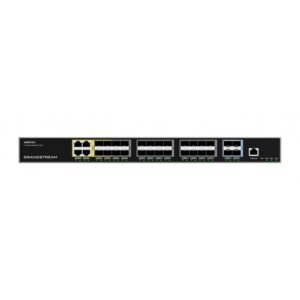
Grandstream GWN7831 Layer 3 Aggregation Managed Switch – 24 × SFP, 4 × 10G SFP+, 4 × Combo Ports, 128Gbps Switching, Advanced Routing & Security
16 in stock
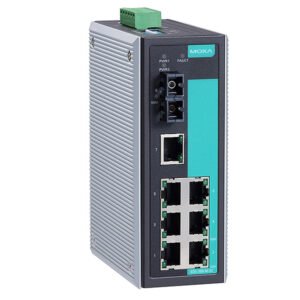
Moxa EDS-308 8 Ports Unmanaged Industrial Ethernet Switch
16 in stock
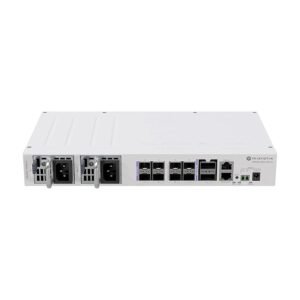
MIKROTIK CRS510-8XS-2XQ-IN Cloud Router Switch
16 in stock
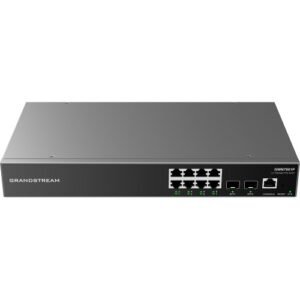
Grandstream GWN7801P Enterprise 8-Port Gigabit L2+ Managed PoE/PoE+ Switch with 2 Gigabit SFP Uplink Ports
16 in stock
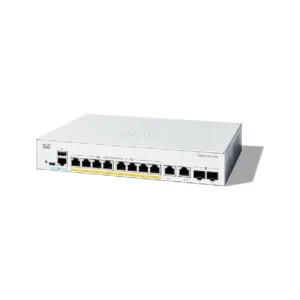
Cisco Catalyst 1300 8-Port Gigabit Switch + 2 x Gig Combo | C1300-8T-E-2G
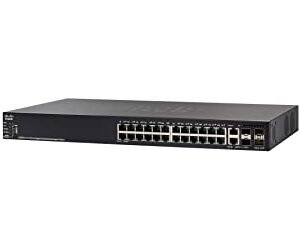 Cisco SG550X-24 24-Port Gigabi...
₹199,999.00 Original price was: ₹199,999.00.₹139,999.00Current price is: ₹139,999.00.
16 in stock
Reviews
There are no reviews yet.